← Back
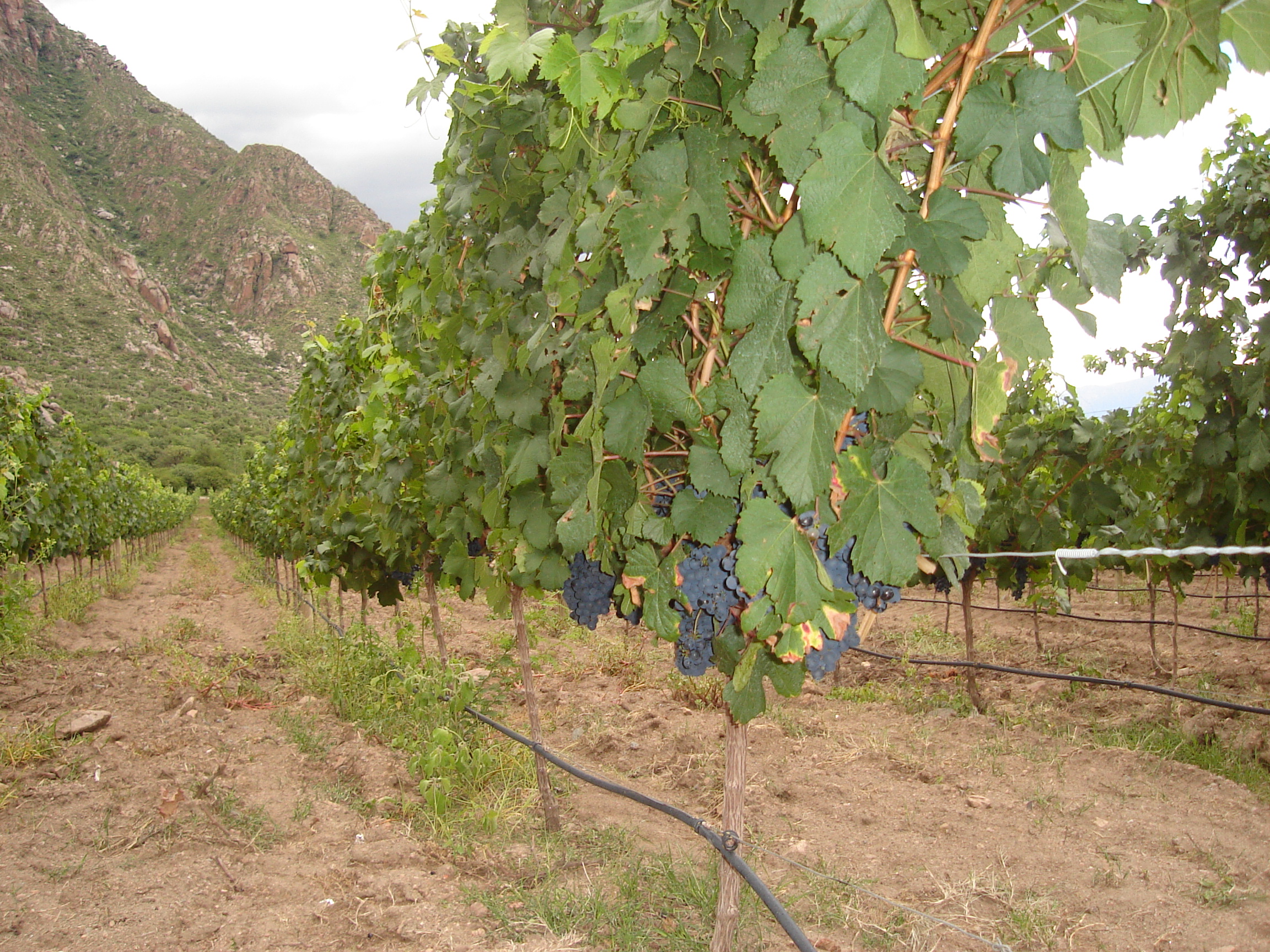
Malbec grape bunch

🍇 Malbec

Also known as: Côt (Loire), Auxerrois (Cahors), Pressac
Pronunciation: MAHL-bek /mælˈbɛk/
Red Origin: Cahors, France

About Malbec

Malbec has become synonymous with Argentina, where it has found its most successful expression, but it originated in France's Cahors region where it was known as "the black wine" for its inky colour. After phylloxera devastated French vineyards and Bordeaux favored other varieties, Malbec found a new home in Argentina.

In Mendoza's high-altitude vineyards, Malbec produces deeply colored, plush wines with ripe fruit and soft tannins. The intense UV light and cool nights at elevation give the wines concentration and freshness. Argentine Malbec tends to be more fruit-forward than its French counterpart.

In Cahors, the original French style is more rustic and tannic, often described as "black wine" for its intensity. The grape is also grown as a minor blending component in Bordeaux and is finding new homes in California and Chile.

Wine Colour & Appearance

Typical colour: Deep purple to inky violet-black

One of the darkest grapes. The violet-purple hue is distinctive compared to blue-black Syrah.

Colour Variations by Region

Mendoza (Argentina): Very deep, opaque purple with violet rim
Cahors (France): Deep ruby-black, sometimes more rustic
High altitude Mendoza: Intensely saturated purple-black
Intensity Deep to opaque
Clarity Often dense enough to be opaque in core
Viscosity Medium-high to high - typically 13.5-15% alcohol

Wine Characteristics

Body
Full
Tannin
Medium
Acidity
Medium
Sweetness
Dry
Alcohol
12.5–15%

Alcohol content can vary based on growing region and winemaking style, with warmer climates generally producing higher alcohol wines.

Tannins

Medium Tannins
Texture & Feel Plush and velvety despite the dark colour. Softer than expected, with a smooth, rounded mouthfeel. Ripe and well-integrated.
Where You Feel Them Mid-palate, gentle grip without excessive drying
Ageing Potential Moderate - most drink well at 5-10 years

Aroma & Flavour Profile Le Nez du Vin Reference →

Aromas (Nose) [Le Nez aroma]

  • Plum
  • Blackberry [M17 blackberry]
  • Black cherry
  • Violet [M29 violet]
  • Cocoa
  • Leather [M45 leather]
  • Tobacco

Flavours (Palate)

  • Dark fruits
  • Plush texture
  • Moderate tannins
  • Chocolate notes
  • Smooth finish

The Nose

Malbec wines offer a captivating aroma profile, initially bursting with ripe, dark fruit—think juicy blackberries, plums, and blueberries—that define its primary character. As the wine develops, secondary notes of violet and subtle spice emerge, often interwoven with a pleasant earthiness. With age, tertiary aromas of vanilla and a smoky finish add complexity, creating a rich and inviting sensory experience.

The Palate

Malbec wines are known for their full body and bold flavors of dark fruit, particularly black plum, blackberry, and black cherry. They typically exhibit firm tannins and a refreshing acidity that balances the rich fruit, often with a distinctive deep purple hue. Depending on the region and winemaking, expect savory notes alongside the fruit, creating a complex and powerful palate.

Viticulture

Climate:
Warm, sunny, with significant diurnal temperature variation (hot days, cool nights). Mediterranean or continental climates are ideal.
Soil:
Well-drained soils are crucial. Ideal soils include:
Training Systems:
Vertical Shoot Positioning (VSP) - common in Argentina, promotes good airflow and sunlight exposure., Cordon Royat - used in some areas, especially in France., Spur-pruned vines - also used in France., Goblet (en gobelet) - traditional in old vineyards, particularly in Argentina, provides shade and water retention.
Yield:
Moderate to high yielding, but quality is best with controlled yields (around 8-10 tonnes/hectare for quality wine).
Budbreak And Maturity:
Relatively late budding and late maturing. This is advantageous in areas with potential for spring frosts and allows for full phenolic development.
Harvest Time:
Typically late September to November in the Northern Hemisphere, and late February to April in the Southern Hemisphere.
Key Considerations:
Sun exposure: Balance is key. Too much sun can lead to sunburn; too little can result in underripe flavors., Water management: Strategic water stress can enhance flavor concentration., Altitude: Higher altitudes generally produce more complex and aromatic wines., Clone selection: Different clones of Malbec exhibit varying characteristics.
Regions:
Argentina (Mendoza is the most famous, also Salta, San Juan, La Rioja), France (Cahors is the historical home, also Southwest France), USA (California, Washington State), Chile, Australia, South Africa
Soil Types:
Loam, Sandy Loam, Gravelly soils, Alluvial soils (especially in Mendoza), Calcareous soils (Cahors)
Vineyard Management:
Canopy management is critical to protect grapes from intense sun and ensure good airflow., Leaf removal is often practiced to improve sunlight penetration., Irrigation is often necessary, especially in arid regions like Mendoza, but water stress can be used strategically to concentrate flavors., Susceptible to powdery mildew and botrytis, requiring careful monitoring and treatment., Malbec vines are vigorous and can be prone to excessive vegetative growth, requiring pruning and management., Altitude plays a significant role in quality, especially in Argentina. Higher altitudes contribute to greater temperature variation, increased UV exposure, and more concentrated flavors.

Grape Morphology

Skin Thickness
Thick
Berry Size
Medium
Bunch Tightness
Medium
Botrytis Susceptibility
Medium

Winemaking Notes

Oak Affinity
Medium
Oxidation Tendency
Moderate
MLC Typical
Yes
Ageing Potential
10-20 years

Blending Partners

Cabernet Sauvignon — Primary partner

To balance tannins and add structure

Common in: Argentina, France, Bordeaux

Merlot — Primary partner

To polish tannins and add softness

Common in: Argentina, France, Bordeaux

Gamay — Secondary partner

Blending partner

Common in: France

Notable Regions

Mendoza, Argentina The heartland of Argentinian Malbec. High-altitude vineyards benefit from intense sunlight, cool nights, and irrigation from the Andes snowmelt. Sub-regions like Luján de Cuyo, Maipú, and Uco Valley are particularly renowned.
Luján de Cuyo, Mendoza, Argentina A key sub-region within Mendoza, known for older vineyards and traditionally-styled Malbecs. Home to many iconic wineries.
Uco Valley, Mendoza, Argentina A high-altitude region in Mendoza, producing elegant and complex Malbecs with good acidity. Increasingly recognized for world-class wines.
Salta, Argentina Northern Argentina, known for high-altitude vineyards and a unique expression of Malbec, often with spicy and floral notes.
Cahors, France The historical home of Malbec (known locally as 'Côt'). Produces deeply colored, tannic wines with dark fruit flavors. Production is smaller than in Argentina.
Libournais, Bordeaux, France Malbec is a blending grape in some Bordeaux wines, particularly in the Libournais region (Pomerol, Saint-Émilion). It adds color and softness.
Washington State, USA Growing interest in Malbec in Washington State, particularly in warmer areas. Produces fruit-forward wines.
South Africa Malbec is grown in small quantities in South Africa, often blended with other varietals.

Region Map

Similar Grapes & Lateral Confusion

These grapes are commonly confused with Malbec in blind tasting. Here's how to tell them apart:

Syrah

Why confused: Both inky, full-bodied with dark fruit. Both dark, full-bodied with similar intensity.

How to distinguish: Syrah: Syrah has pepper and smoked meat notes. Malbec is plummier with violet florals and softer tannins.
Malbec: Syrah has black pepper (diagnostic). Malbec has more plum/violet and softer tannins despite its dark colour.
Compare side by side →

Carménère

Why confused: Both South American specialities with dark fruit.

How to distinguish: Malbec: Carménère has distinctive green pepper. Malbec is plummier without the vegetal notes.
Compare side by side →

Blind Tasting Tips

Colour: Very deep, opaque purple-black. One of the darkest wines.

Key markers: Plum and dark fruits dominate. Violet florals are distinctive. Softer tannins than you might expect for such a dark wine.

Structure: Full body with medium (not high) tannins. Plush, velvety texture. Argentine versions often show higher alcohol.

Common confusions: Syrah (more pepper/spice), Petite Sirah (higher tannins), Carménère (more herbaceous).

Vintage History

Notable vintages for Malbec:

2023
A challenging vintage due to spring frosts, resulting in lower yields. The resulting wines show bright, fresh fruit, but with less overall weight than 2022. Early indications point to a more elegant style, with floral notes and a slightly higher acidity. Expect wines needing a few years to fully integrate.
2022
A nearly perfect growing season. Consistent warmth and adequate rainfall produced generous yields of fully ripe fruit. Wines are deeply colored, with opulent aromas of blackberry, plum, and violet. Full-bodied with velvety tannins and a long, lingering finish. A vintage for hedonistic enjoyment, but with the structure for aging.
2021
A cooler, wetter vintage, particularly during the early part of the growing season. This resulted in wines with more restraint and freshness. The fruit profile leans towards red cherry and cranberry, with subtle spice notes. Tannins are present but well-integrated. A more classic, Burgundian-inspired style of Malbec.
2020
A warm and dry vintage, leading to concentrated wines with ripe tannins. The wines exhibit aromas of black fruit, chocolate, and a hint of licorice. Powerful and opulent, but with good underlying structure. Will benefit from cellaring.
2019
A very good vintage, with ideal conditions throughout the growing season. The wines are balanced and expressive, with a beautiful aromatic profile of dark fruit, floral notes, and spice. Smooth tannins and a long, elegant finish. Highly approachable now, but with aging potential.
2018
A warm and dry year, resulting in concentrated and full-bodied wines. The fruit is predominantly black, with notes of cassis, blackberry jam, and a touch of vanilla from oak aging. Powerful tannins require decanting or cellaring.
2017
A more moderate vintage, with balanced temperatures and rainfall. The wines are elegant and refined, with a bright fruit profile and silky tannins. A good vintage for showcasing the finesse of Malbec.
2016
A classic Mendoza vintage. Warm days and cool nights allowed for optimal ripening and flavor development. The wines are rich, complex, and well-structured, with aromas of black cherry, plum, and spice. Excellent aging potential.
2015
A powerful and concentrated vintage, with wines exhibiting intense dark fruit flavors and firm tannins. A vintage for those who enjoy bold, age-worthy Malbecs.

Food Pairings

🌱 Plant-Based & Vegetarian
Empanadasve Dark chocolateve Blue cheese
🍖 Classic Pairings
Grilled steak (asado) BBQ meats Lamb

Parentage & Genetics

Parents: Prunelard × Magdeleine Noire des Charentes

Clones

Malbec 10

Original plant material underwent microshoot tip tissue culture, potentially leading to virus-free propagation. No specific performance details provided in sources.

Cot

Officially recognized as Malbec for propagating material in France. Produces colored, aromatic, and tannic wines.

Various Clones

Significant variation in yield exists between clones – some produce twenty times more grapes than others under the same conditions.

Bibliography

Books and articles about Malbec:

The World Atlas of Wine by Hugh Johnson & Jancis Robinson (Mitchell Beazley, 2019)

Comprehensive overview of all major wine regions, with a good section on Argentina and Malbec.

Wine Folly: Magnum Edition: The Master Guide by Madeline Puckette & Justin Hammack (Folly Productions, 2018)

Visually-driven guide, good for beginners. Includes a profile of Malbec.

Argentina's Malbec: A History of the Grape by Laura Catena (University of California Press, 2018)

Detailed history of Malbec in Argentina, from its origins to its current prominence. Written by a leading figure in Argentinian wine.

Malbec: The Complete Guide to the World's Most Exciting Grape by Michael Apstein (Sterling, 2014)

A dedicated guide to Malbec, covering its history, viticulture, winemaking, and tasting notes.

The Oxford Companion to Wine by Jancis Robinson (Editor) (Oxford University Press, 2015)

The definitive reference work on wine. Extensive entry on Malbec.

Viticulture of Malbec: From Cahors to Argentina

Focuses on the viticultural aspects of Malbec, comparing practices in its original home of Cahors with those in Argentina.

Malbec: A Rising Star

Current overview of Malbec trends and producers.

Bodega Catena Zapata

Official website of a leading Malbec producer in Argentina. Provides information on their wines and vineyards.

Appellation America - Cahors

Information on the Cahors region of France, the original home of Malbec.

Wine-Searcher - Malbec

Price comparison and information on Malbec wines from around the world.

← Back to Grape Encyclopaedia

Wines Featuring Malbec

Wines from our tasting directory that feature this grape:

Chateau D'Issan 2019 Margaux
Chateau D'Issan
Bordeaux
Page created: 27 January 2026 | Last updated: 29 January 2026

Grape Page Help

Navigating the Page

Each grape page is organised into sections that you can access quickly:

  • Table of Contents — Click any link at the top to jump directly to that section
  • ← Back button — Returns you to the Grape Encyclopaedia with your filters preserved
  • ↑ Back to top — Appears when you scroll down; click to return to the top
  • Breadcrumbs — Shows your location (Home → Grape Encyclopaedia → Grape Name)

Wine Colour

This section shows the typical appearance of wines made from this grape:

  • Colour swatches — Visual examples from young to aged expressions
  • Intensity — How deep or pale the colour typically appears
  • Clarity — Whether wines are typically clear, hazy, or have sediment
  • Viscosity — The "legs" or "tears" you see on the glass

Characteristics

Key structural elements that define the wine:

  • Acidity — How tart or fresh the wine tastes (low to high)
  • Body — The weight and texture in your mouth (light to full)
  • Alcohol — Typical alcohol range, sometimes with regional variations
  • Sweetness — Dry, off-dry, or sweet (where applicable)

Tannins (Red Wines)

For red wines, this section describes the tannin profile:

  • Level — Low, medium, or high tannin content
  • Texture — Velvety, silky, grippy, chalky, or sandy
  • Location — Where you feel them (front teeth, gums, cheeks, back of mouth)
  • Ageing potential — How tannins evolve over time

Aroma and Flavour Profile

Aromas (nose) and flavours (palate) are listed separately:

  • The Nose — What you smell before tasting
  • The Palate — What you taste and feel in your mouth
  • Le Nez numbers — References like [M15] correspond to Le Nez du Vin aroma kit bottles (M = Masterkit, O = Oak, F = Faults)
Tip: Le Nez Reference Click the "Le Nez du Vin Reference" link in the Aroma section header to see the full aroma reference chart.

Viticulture

Growing conditions this grape prefers:

  • Climate — Cool, moderate, or warm climate preferences
  • Soil — Preferred soil types (limestone, clay, gravel, etc.)
  • Vigour — How vigorously the vine grows
  • Challenges — Common growing difficulties (frost, rot, disease)

Notable Regions

Key wine regions where this grape excels:

  • Map thumbnails — Small preview maps for each region (where available)
  • Click to expand — Opens a larger interactive map
  • Wine region boundaries — Highlighted in wine-red where data is available
  • Zoom and pan — Explore the map interactively
  • Reset View — Returns to the original zoom level

Old World vs New World

Compares how the grape is expressed in different regions:

  • Old World — Traditional European expressions (France, Italy, Spain, etc.)
  • New World — Modern expressions (Australia, USA, Chile, etc.)
  • Differences in style, ripeness, oak use, and flavour profiles

Similar Grapes

Grapes that are often confused with this variety in blind tasting:

  • Why confused — What characteristics they share
  • How to distinguish — Key differences to look for

Blind Tasting Tips

Practical guidance for identifying this grape when tasting blind:

  • Key markers to look for
  • Common pitfalls and look-alikes
  • Diagnostic characteristics that set it apart

Food Pairings

Suggested foods that complement wines from this grape:

  • Vegan/Vegetarian — Plant-based options listed first, marked (ve) for vegan
  • Classic pairings — Traditional meat and seafood matches