← Back
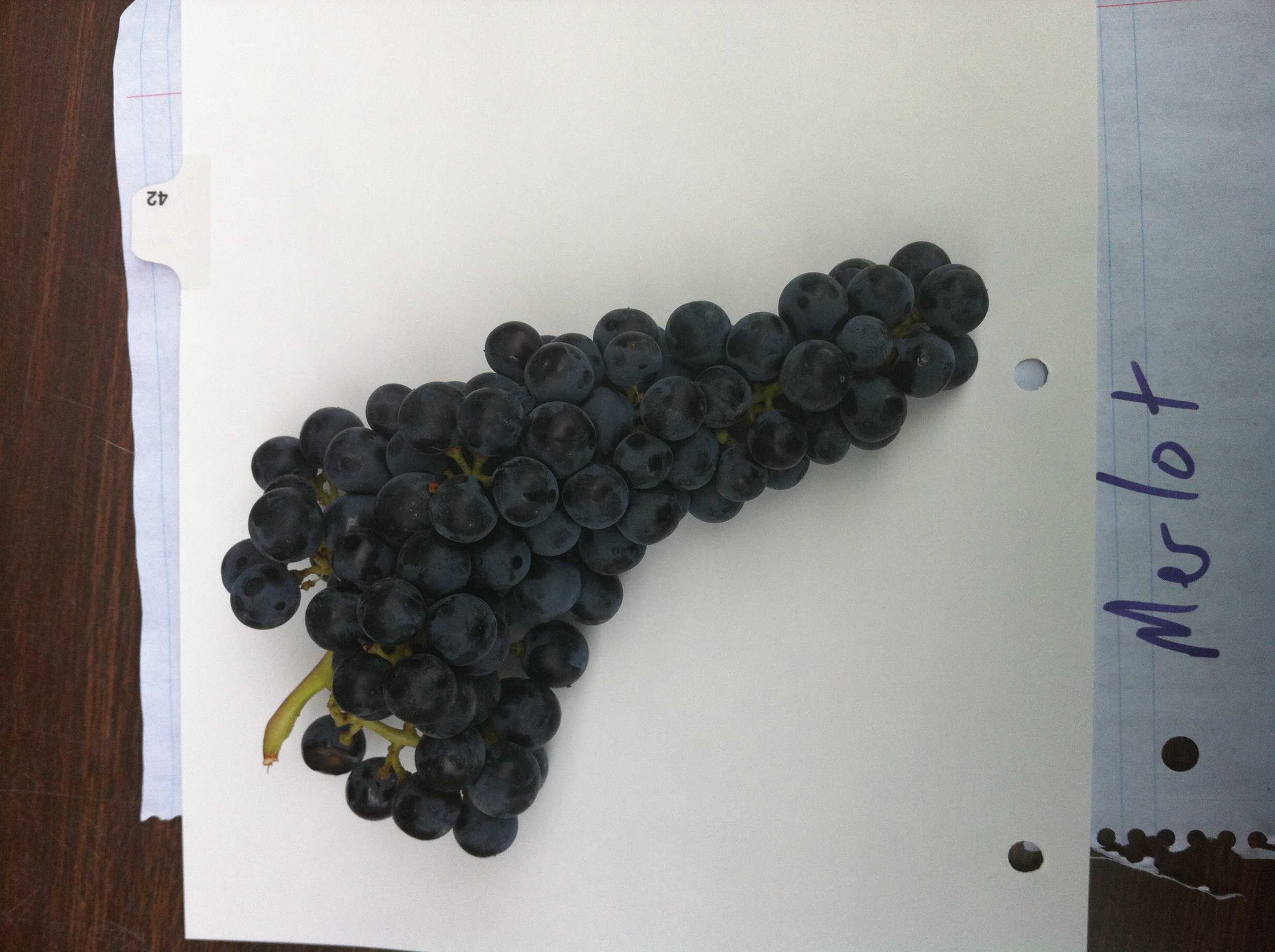
Merlot grape bunch

🍇 Merlot

Pronunciation: MER-low /mɝˈloʊ/
Red Origin: Bordeaux, France

About Merlot

Merlot is the most widely planted grape in Bordeaux and produces some of the world's most celebrated and expensive wines in Pomerol and Saint-Émilion. Its name derives from the French word for blackbird (merle), possibly because the birds love its sweet, early-ripening berries.

Compared to Cabernet Sauvignon, Merlot produces softer, rounder wines with lower tannins and earlier drinkability. Its thin skin and larger berries contribute to its supple, velvety texture. The grape thrives in clay soils where it can retain moisture during dry periods.

After being dismissed in the 1990s (notably in the film "Sideways"), Merlot has regained appreciation as producers focus on quality over quantity. The finest examples from Pomerol's Château Pétrus and Le Pin rank among the world's most expensive wines.

Wine Colour & Appearance

Typical colour: Deep ruby to plum

Rich ruby-crimson in youth, evolving to garnet and brick-brown with age. Generally slightly lighter than Cabernet Sauvignon.

Colour Variations by Region

Pomerol: Deep ruby with purple rim
California: Inky purple-ruby
Chile: Vivid crimson-purple
Intensity Medium-deep - good concentration but not usually opaque
Clarity Brilliant - clean and bright
Viscosity Medium-high - noticeable legs indicating ripe fruit and alcohol

Wine Characteristics

Body
Medium full
Tannin
Medium
Acidity
Medium
Sweetness
Dry
Alcohol
13–14.5%

Merlot from cooler regions (like France) typically has 13-14% ABV, while warmer climates can result in up to 14.5% ABV.

Tannins

Medium Tannins
Texture & Feel Soft, velvety, and round. Plush rather than grippy. Often described as "silky" with a smooth, supple mouthfeel.
Where You Feel Them Mid-palate with gentle presence, less gum-drying than Cabernet
Ageing Potential Moderate - approachable young, peak at 5-15 years

Aroma & Flavour Profile Le Nez du Vin Reference →

Aromas (Nose) [Le Nez aroma]

  • Plum
  • Black cherry
  • Chocolate
  • Herbs
  • Coffee [M52 coffee]
  • Violet [M29 violet]
  • Fruitcake (aged)

Flavours (Palate)

  • Red and black plums
  • Soft, velvety tannins
  • Smooth texture
  • Chocolate notes
  • Medium finish

The Nose

Merlot’s aroma is immediately inviting, bursting with primary notes of ripe red plum and juicy black cherry, often evolving to include hints of raspberry as well. With age, secondary aromas of cocoa, vanilla, and cedar develop from oak influence, leading to tertiary notes of dried fig, tobacco, and earthy undertones in more mature examples. The overall impression is one of plush fruit balanced by subtle complexity, varying from bright and fresh to rich and decadent depending on the climate and winemaking style.

The Palate

Merlot wines typically offer a medium-bodied experience with soft, velvety tannins and balanced acidity, creating a smooth mouthfeel. The flavor profile is dominated by ripe red and black fruit – think plum, cherry, and blackberry – often layered with notes of chocolate, vanilla, or a subtle herbal quality. Depending on the climate, these wines can range from fresh and red-fruited to richer and more concentrated with baked fruit and mocha undertones.

Viticulture

Climate:
Merlot thrives in moderate climates. It's less tolerant of extreme cold than Cabernet Sauvignon but more tolerant of warmer conditions.
Training Systems:
Vertical Shoot Positioning (VSP), Guyot, Cordon-trained systems
Yield:
Average yield is 5-8 tonnes per hectare (2-3.2 tonnes per acre), but can vary significantly depending on vineyard management and climate.
Brix Level:
Typically 22-25 Brix at harvest.
Common Issues:
Powdery mildew, Downy mildew, Botrytis bunch rot (especially in wet years), Black rot, Leafroll viruses, Frost damage (early budburst), Bird predation
Considerations:
Pruning severity impacts yield and berry characteristics. Moderate pruning generally yields better quality.
Drainage:
Excellent drainage is crucial to prevent root rot.
Indicators:
Berry flavor development, tannin ripeness, sugar levels (Brix), and acidity are key indicators. Seed color (turning from green to brown) is also used.
Pest Management:
Integrated Pest Management (IPM) strategies are recommended to minimize pesticide use.
Ph:
6.0-7.0 (slightly acidic to neutral)
Row Orientation:
Row orientation can influence sun exposure and air circulation. Generally, rows are oriented to maximize sunlight interception.
Soil Depth:
Moderate to deep soil profiles are beneficial.
Timing:
Typically late September to October in the Northern Hemisphere, and February to March in the Southern Hemisphere.
Type:
Spur pruning is common, allowing for controlled crop load.
Vine Density:
Typically 2,500-4,000 vines per hectare (1,000-1,600 vines per acre). Higher density can be used for quality-focused production.

Grape Morphology

Skin Thickness
Medium
Berry Size
Medium
Bunch Tightness
Medium
Botrytis Susceptibility
Medium

Winemaking Notes

Oak Affinity
Medium
Oxidation Tendency
Moderate
MLC Typical
Yes
Ageing Potential
5-10 years

Blending Partners

Cabernet Sauvignon — Primary partner

To smooth out the wines

Common in: Bordeaux, Left Bank

Cabernet Franc — Traditional partner

Used in Bordeaux-style blends

Common in: Bordeaux

Notable Regions

Bordeaux, France
Washington State, USA
California, USA
Chile
Italy
Australia
Argentina

Region Map

Old World vs New World

Understanding regional style differences helps identify origin in blind tasting.

🏰 Old World (Europe)

  • Plum and red fruit dominant
  • Earthy, truffle notes (especially Pomerol)
  • Firm but velvety tannins
  • Moderate alcohol levels
  • More structure and ageability
  • Terroir complexity

🌎 New World (Americas, Australasia)

  • Richer, jammier fruit
  • Chocolate, mocha oak notes
  • Softer, plusher texture
  • Higher alcohol, sometimes sweeter
  • More immediately appealing
  • Can lack acidity/structure

Key Tells for Blind Tasting

Earthy, savoury complexity with firm structure = Bordeaux. Plush, chocolatey, soft wine with obvious fruit sweetness = New World, likely California or Chile.

Similar Grapes & Lateral Confusion

These grapes are commonly confused with Merlot in blind tasting. Here's how to tell them apart:

Cabernet Sauvignon

Why confused: Both Bordeaux varieties with dark fruit character and often blended together. Both Bordeaux varieties with similar colour depth.

How to distinguish: Cabernet Sauvignon: Cab Sauv has CASSIS (blackcurrant) vs plum in Merlot. Cab Sauv has higher, grippier tannins. Merlot is softer, rounder, more approachable.
Merlot: Merlot has PLUM fruit (vs cassis). Softer, velvety tannins. More chocolate notes. Earlier-drinking.
Compare side by side →

Carménère

Why confused: Historically confused in Chile; similar body and texture. Were confused for over a century in Chile!

How to distinguish: Merlot: Merlot lacks the distinctive green bell pepper. Carménère is more herbaceous. Merlot is plummier and rounder.
Carménère: Carménère has distinctive GREEN BELL PEPPER. Merlot is plummy without vegetal notes.
Compare side by side →

Tempranillo

Why confused: Similar plum fruit and soft tannins.

How to distinguish: Tempranillo: Tempranillo shows leather, tobacco, and distinctive oak character. Merlot is rounder without the savoury complexity.
Compare side by side →

Blind Tasting Tips

Colour: Medium-deep ruby; develops brick/orange rim earlier than Cabernet.

Key markers: Plum dominates over cassis. Look for softer, more approachable tannins. Often has a distinct chocolate note.

Structure: Medium tannins with a velvety texture. Medium acidity. Medium-full body but rounder than Cabernet.

Common confusions: Cabernet Sauvignon (higher tannins, cassis), Cabernet Franc (more herbaceous, lighter).

Vintage History

Notable vintages for Merlot:

2023
A cool and wet spring delayed budburst, but a warm, dry summer allowed for excellent fruit development. Moderate temperatures throughout August and September preserved acidity and vibrant fruit flavors. Harvest began in mid-September. The resulting Merlot is deeply colored with notes of black cherry, plum, and a hint of cocoa. Well-structured tannins suggest good aging potential. Overall, an excellent vintage for Merlot in Napa Valley.
2022
2022 was a remarkably warm and dry vintage in Bordeaux. Early budburst and flowering were followed by a prolonged heatwave in July. Veraison occurred early. Despite the heat, careful canopy management helped preserve acidity. Harvest was the earliest on record, beginning in late August. The Merlot exhibits ripe, concentrated flavors of black fruit, chocolate, and spice. Tannins are plush and well-integrated. A powerful and opulent vintage, best enjoyed young to medium-term.
2021
A challenging vintage marked by a late spring frost that significantly reduced yields in some areas. The summer was hot and dry, leading to water stress for vines. However, careful irrigation and canopy management mitigated the worst effects. Harvest occurred in late October. The Merlot displays concentrated flavors of blackberry and cassis, with firm tannins and a balanced acidity. A good, but not exceptional, vintage requiring careful selection.
2020
A near-perfect growing season. Consistent warm days and cool nights allowed for slow, even ripening. The absence of major heat spikes or rainfall resulted in exceptional fruit quality. Harvest took place in early October. The Merlot is characterized by lush flavors of red plum, raspberry, and vanilla. Silky tannins and a long, elegant finish. An outstanding vintage with excellent aging potential.
2019
A warm and relatively dry vintage, though not as extreme as 2018 or 2022. The growing season was consistent, with ample sunshine and moderate temperatures. Harvest began in late September. The Merlot is rich and opulent, with notes of black cherry, truffle, and spice. The tannins are refined and well-integrated. A classic Pomerol vintage with excellent structure and aging potential.
2018
A very warm and dry vintage, resulting in concentrated flavors and ripe tannins. Water management was crucial. Harvest was early, starting in mid-September. The Merlot shows intense aromas of black fruit, mocha, and vanilla. Full-bodied with a long finish. A bold and powerful vintage.
2017
A cooler vintage with higher than average rainfall during the spring. This led to vigorous growth and required careful canopy management. The summer was warm and dry, allowing for good ripening. Harvest occurred in late March/early April. The Merlot is elegant and balanced, with notes of red plum, cherry, and a hint of earthiness. Moderate tannins and a refreshing acidity. A classic Chilean Merlot.
2016
A very good to excellent vintage, though initially marked by a wet spring. A warm and dry summer rescued the growing season. Harvest was relatively early. The Merlot is fragrant and complex, with notes of blackcurrant, cedar, and tobacco. The tannins are firm but refined. A classic Margaux vintage with excellent aging potential.

Food Pairings

🌱 Plant-Based & Vegetarian
Mushroom risottove Aged Gouda
🍖 Classic Pairings
Roast duck Beef tenderloin Lamb shanks

Parentage & Genetics

Parents: Cabernet Franc × Magdeleine Noire de Charentes

Clones

181

High vigor, good fruit set, produces wines with good color and structure.

182

Early ripening, moderate vigor, known for producing fruity wines.

314

Moderate vigor, good resistance to certain diseases, produces wines with good acidity.

342

High yielding, moderate vigor, produces wines with soft tannins.

343

Moderate vigor, good fruit set, known for producing wines with complex aromas.

345

Late ripening, high tannin levels, produces wines with good aging potential.

346

Moderate vigor, good resistance to powdery mildew, produces wines with good color.

347

Early ripening, moderate vigor, produces wines with delicate flavors.

348

High vigor, good fruit set, produces wines with good structure and tannins.

349

Moderate vigor, good resistance to drought, produces wines with concentrated flavors.

519

Late ripening, high tannin levels, produces wines with good aging potential.

Bibliography

Books and articles about Merlot:

The Oxford Companion to Wine by Jancis Robinson (Oxford University Press, 2014) ISBN: 978-0198706987

Comprehensive reference work covering all aspects of wine. Excellent section on Merlot varieties and regions.

The World Atlas of Wine by Hugh Johnson (Mitchell Beazley, 2019) ISBN: 978-1844779236

Detailed maps and descriptions of wine regions, including key Merlot areas. Focuses on terroir.

Wine Tasting: A Psychological Perspective

Discusses the sensory evaluation of wine, relevant to understanding Merlot's characteristics.

Windows on the World Complete Wine Course by Kevin P. Zraly (Sterling, 2006) ISBN: 978-1402736692

A good introductory text for wine enthusiasts, with a section on Merlot.

Merlot

Provides information on Merlot pricing, regions, and tasting notes. Useful for current market data.

Wine Aroma and Flavor

Explores the chemical compounds contributing to wine aroma and flavor, including those found in Merlot.

New World Wine Guide by Tim Atkin (Mitchell Beazley, 2023) ISBN: 978-1844772279

Focuses on wines from outside of Europe, including Merlot from the Americas, Australia, and South Africa.

Merlot Wine Guide

Visually-oriented guide to Merlot, covering flavor profiles, food pairings, and regions.

← Back to Grape Encyclopaedia

Wines Featuring Merlot

Wines from our tasting directory that feature this grape:

Chateau D'Issan 2019 Margaux
Chateau D'Issan
Bordeaux
Montes Alpha Cabernet Sauvignon
Viña Montes
Colchagua Valley, Chile
Page created: 27 January 2026 | Last updated: 29 January 2026

Grape Page Help

Navigating the Page

Each grape page is organised into sections that you can access quickly:

  • Table of Contents — Click any link at the top to jump directly to that section
  • ← Back button — Returns you to the Grape Encyclopaedia with your filters preserved
  • ↑ Back to top — Appears when you scroll down; click to return to the top
  • Breadcrumbs — Shows your location (Home → Grape Encyclopaedia → Grape Name)

Wine Colour

This section shows the typical appearance of wines made from this grape:

  • Colour swatches — Visual examples from young to aged expressions
  • Intensity — How deep or pale the colour typically appears
  • Clarity — Whether wines are typically clear, hazy, or have sediment
  • Viscosity — The "legs" or "tears" you see on the glass

Characteristics

Key structural elements that define the wine:

  • Acidity — How tart or fresh the wine tastes (low to high)
  • Body — The weight and texture in your mouth (light to full)
  • Alcohol — Typical alcohol range, sometimes with regional variations
  • Sweetness — Dry, off-dry, or sweet (where applicable)

Tannins (Red Wines)

For red wines, this section describes the tannin profile:

  • Level — Low, medium, or high tannin content
  • Texture — Velvety, silky, grippy, chalky, or sandy
  • Location — Where you feel them (front teeth, gums, cheeks, back of mouth)
  • Ageing potential — How tannins evolve over time

Aroma and Flavour Profile

Aromas (nose) and flavours (palate) are listed separately:

  • The Nose — What you smell before tasting
  • The Palate — What you taste and feel in your mouth
  • Le Nez numbers — References like [M15] correspond to Le Nez du Vin aroma kit bottles (M = Masterkit, O = Oak, F = Faults)
Tip: Le Nez Reference Click the "Le Nez du Vin Reference" link in the Aroma section header to see the full aroma reference chart.

Viticulture

Growing conditions this grape prefers:

  • Climate — Cool, moderate, or warm climate preferences
  • Soil — Preferred soil types (limestone, clay, gravel, etc.)
  • Vigour — How vigorously the vine grows
  • Challenges — Common growing difficulties (frost, rot, disease)

Notable Regions

Key wine regions where this grape excels:

  • Map thumbnails — Small preview maps for each region (where available)
  • Click to expand — Opens a larger interactive map
  • Wine region boundaries — Highlighted in wine-red where data is available
  • Zoom and pan — Explore the map interactively
  • Reset View — Returns to the original zoom level

Old World vs New World

Compares how the grape is expressed in different regions:

  • Old World — Traditional European expressions (France, Italy, Spain, etc.)
  • New World — Modern expressions (Australia, USA, Chile, etc.)
  • Differences in style, ripeness, oak use, and flavour profiles

Similar Grapes

Grapes that are often confused with this variety in blind tasting:

  • Why confused — What characteristics they share
  • How to distinguish — Key differences to look for

Blind Tasting Tips

Practical guidance for identifying this grape when tasting blind:

  • Key markers to look for
  • Common pitfalls and look-alikes
  • Diagnostic characteristics that set it apart

Food Pairings

Suggested foods that complement wines from this grape:

  • Vegan/Vegetarian — Plant-based options listed first, marked (ve) for vegan
  • Classic pairings — Traditional meat and seafood matches