← Back
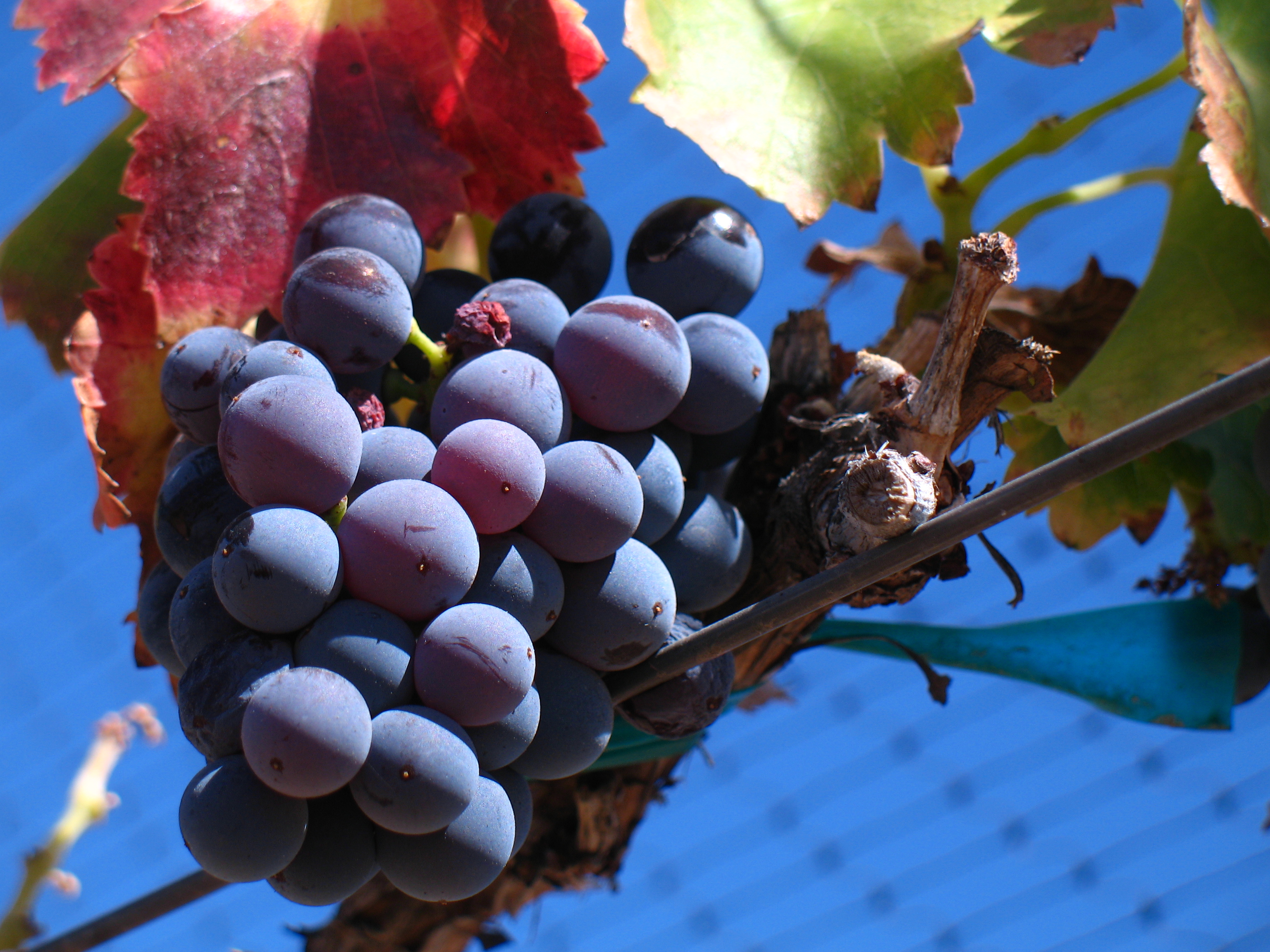
Grenache grape bunch

🍇 Grenache

Also known as: Garnacha (Spain), Cannonau (Sardinia), Grenache Noir
Pronunciation: gruh-NASH /ɡrəˈnɑːʃ/
Red Origin: Aragon, Spain

About Grenache

Grenache is one of the world's most widely planted red varieties, thriving in hot, dry climates around the Mediterranean. Though now associated with France's Southern Rhône, it originated in Spain's Aragon region, where it's known as Garnacha.

The grape produces wines with relatively light colour but full body and high alcohol, often reaching 15%+ naturally. Its thin skin and late ripening make it prone to oxidation, so it's often blended with more tannic varieties like Syrah and Mourvèdre in the classic GSM blend.

Grenache is the dominant grape in Châteauneuf-du-Pape and produces exceptional single-varietal wines in Priorat, where old bush vines on steep slate slopes yield concentrated, powerful wines. It's also the primary grape in most rosé wines from Provence.

Wine Colour & Appearance

Typical colour: Medium ruby with orange/tawny rim

Thin-skinned grape showing age quickly. The pale core and orange rim are distinctive identifiers.

Colour Variations by Region

Southern Rhône (Châteauneuf): Ruby with pronounced orange/brick edge
Priorat: Darker, more concentrated ruby
Australia (old vines): Medium ruby to garnet
Intensity Medium (rarely opaque)
Clarity Clear, often slight haze from low tannin extraction
Viscosity Medium to high - characteristically high alcohol (14-16%)

Wine Characteristics

Body
Full
Tannin
Low
Acidity
Low
Sweetness
Dry
Alcohol
12–15%

Grenache wines are known for potentially high alcohol content due to late ripening and high sugar accumulation. Regional variations and winemaking styles can influence the final ABV.

Tannins

Low Tannins
Texture & Feel Soft, barely perceptible tannins despite the wine's power. Supple and round, almost jammy. Alcohol provides structure instead.
Where You Feel Them Minimal presence - warmth from alcohol more apparent
Ageing Potential Limited - best within 5-10 years for most examples

Aroma & Flavour Profile Le Nez du Vin Reference →

Aromas (Nose) [Le Nez aroma]

  • Strawberry [M12 strawberry]
  • Raspberry [M13 raspberry]
  • Cherry [M18 cherry]
  • Dried herbs
  • White pepper
  • Orange peel
  • Anise

Flavours (Palate)

  • Sweet red fruits
  • Soft tannins
  • High alcohol warmth
  • Spicy finish
  • Round texture

The Nose

Grenache wines offer a vibrant aroma profile beginning with bright, juicy red fruits like raspberry and strawberry, often accompanied by a playful floral hint of violet. As the wine matures, secondary notes of white pepper and dried oregano emerge, leading to tertiary aromas of leather and sweet cherry preserves, hinting at a warm, spicy complexity. This aromatic evolution creates a wine that is both fresh and inviting, with a lingering warmth on the nose.

The Palate

Grenache wines typically offer a full-bodied experience with vibrant red fruit flavors like raspberry and strawberry, layered with warm spice notes of cinnamon and a hint of white pepper. Generally soft on the palate, red Grenache exhibits low to medium tannins, balanced by moderate acidity, though the wines are known for a relatively high alcohol content. As Grenache ages, these initial fruit notes evolve into a more complex spiced richness, creating a structurally satisfying and versatile wine.

Viticulture

Climate:
Warm, dry climates are ideal. Thrives in Mediterranean climates with plenty of sunshine and relatively low rainfall. Can tolerate drought conditions well.
Soil:
Prefers well-drained soils, including stony, gravelly, and schistose soils. Benefits from soils with low fertility, as excessive vigor can lead to lower quality fruit. Good drainage is crucial to prevent excessive vegetative growth.
Rootstock:
Adaptable to a wide range of rootstocks. Rootstock selection depends on soil type, climate, and desired vine vigor. Often grafted onto drought-tolerant rootstocks.
Training Systems:
Cordon training, Spur pruning, Goblet (Gobelet) training - common in old vineyards, Head training
Vigour:
High vigour. Pruning is essential to control growth and maintain fruit quality. Can be prone to excessive vegetative growth if not managed properly.
Yield:
Can be high yielding if not controlled. Lower yields generally produce higher quality wines. Typical yields range from 35-70 hl/ha, but can be much higher.
Canopy Management:
Important for controlling vigor, improving air circulation, and protecting grapes from sun scald. Leaf removal is often practiced to enhance fruit ripening and reduce disease pressure.
Pruning:
Typically spur-pruned or cordon-trained to manage vigor. Can also be head-trained in warmer regions. Severe pruning is often employed to limit yield and concentrate flavors.
Flowering:
Early to mid-season. Generally good fruit set.
Veraison:
Early to mid-season. Color change is relatively early.
Botrytis Bunch Rot:
Susceptible, particularly with ripe, sugary grapes. Good canopy management is important to improve air circulation.
Budbreak:
Early to mid-season. Relatively early budbreak makes it susceptible to spring frosts in marginal climates.
Downy Mildew:
Moderately susceptible, especially in humid conditions.
Drought:
Highly tolerant.
Esca:
Susceptible to Esca (a wood disease).
Eutypa Dieback:
Susceptible to Eutypa dieback (another wood disease).
Maturity:
Late-ripening. Requires a long growing season to fully develop flavors and sugars. Can accumulate high sugar levels, making it suitable for both dry and fortified wines.
Origin:
Spain (likely Aragon)
Powdery Mildew:
Moderately susceptible.
Special Considerations:
Grenache is prone to oxidation, so careful handling of the grapes and must is important. Water stress can be managed through careful irrigation (where permitted) or rootstock selection.

Grape Morphology

Skin Thickness
Medium
Berry Size
Medium
Bunch Tightness
Medium
Botrytis Susceptibility
Medium

Winemaking Notes

Oak Affinity
Low
Oxidation Tendency
High
MLC Typical
Yes
Ageing Potential
5-10 years

Blending Partners

Syrah (Shiraz) — Primary partner

Adds color, tannin, acidity, and complexity

Common in: Rhône Valley, Southern France, Australia

Mourvèdre — Primary partner

Adds structure, tannin, and dark fruit flavors

Common in: Rhône Valley, Southern France

Carignan — Secondary partner

Adds color, acidity, and rustic character

Common in: Southern France, Spain

Tempranillo — Traditional partner

Adds acidity, structure, and complexity

Common in: Rioja, Spain

Cinsaut — Secondary partner

Adds floral aromas, freshness, and lightness

Common in: Southern France

Notable Regions

Rhône Valley, France
Priorat, Spain
Rioja, Spain
Roussillon, France
California, USA (Central Valley, Paso Robles)
South Australia (Barossa Valley, McLaren Vale)

Region Map

Similar Grapes & Lateral Confusion

These grapes are commonly confused with Grenache in blind tasting. Here's how to tell them apart:

Pinot Noir

Why confused: Lighter Grenache can have similar colour and red fruit. Both can be pale with red fruit character.

How to distinguish: Pinot Noir: Grenache has lower acidity and higher alcohol warmth. Lacks the earthy/forest floor complexity of Pinot.
Grenache: Grenache has LOW acidity and HIGH alcohol warmth. Pinot has high acidity. Grenache lacks earthy complexity.
Compare side by side →

Tempranillo

Why confused: Both Spanish varieties with red fruit.

How to distinguish: Grenache: Tempranillo has more structure and leather/tobacco notes from oak. Grenache is jammier and higher alcohol.
Compare side by side →

Mourvèdre

Why confused: GSM partners with similar origins.

How to distinguish: Mourvèdre: Mourvèdre is much darker and more tannic. Grenache is lighter with red fruit and lower tannins.
Compare side by side →

Blind Tasting Tips

Colour: Pale to medium ruby – deceptively light for its body. Often shows an orange/bricky rim even when young.

Key markers: Red fruits (strawberry, raspberry) with a sweet, jammy quality. Herbaceous notes (garrigue). High alcohol "heat" on the finish.

Structure: Full body but LOW tannins – this contrast is diagnostic. Low acidity gives a soft, round mouthfeel.

Common confusions: Pinot Noir (higher acidity, lighter body), Tempranillo (more structured).

Vintage History

Notable vintages for Grenache:

2023
Early budburst due to a warm spring. Dry summer with some water stress, but mitigated by strategic irrigation in some areas. Harvested early September. Concentrated fruit, good acidity, potential for powerful, structured wines. Color is deep. Expect a vintage with good aging potential, but may require some time to integrate the tannins.
2022
A challenging vintage. Severe drought conditions throughout the growing season. Yields were significantly reduced. Wines show concentrated flavors, but lack some of the vibrancy seen in more generous years. High alcohol levels are common. Careful winemaking was crucial to maintain balance.
2021
Cooler vintage with ample rainfall during the spring. Moderate summer temperatures. Harvest was later than usual. Wines exhibit bright red fruit, good acidity, and a more elegant profile. Less opulent than warmer years, but with excellent structure and finesse. A good vintage for Grenache-based rosés.
2020
A warm and dry vintage, but not as extreme as 2019. Generous fruit, ripe tannins, and a full body. The wines are approachable in their youth, but possess the structure for aging. Classic Grenache characteristics are well-expressed. Some examples show a hint of garrigue.
2019
An exceptionally warm and dry vintage. Concentrated, powerful wines with ripe tannins and intense fruit. Some wines may be slightly overripe, but most show excellent balance. Requires significant aging to integrate the tannins. A vintage for collectors.
2018
Warm and relatively dry vintage. Wines are full-bodied, with ripe black fruit and spice notes. Good structure and moderate acidity. A crowd-pleasing vintage that is approachable in its youth.
2017
A more classic vintage after a string of warmer years. Moderate temperatures and sufficient rainfall. Wines are balanced, with good acidity and aromatic complexity. A vintage that showcases the terroir.
2016
A near-perfect vintage. Ideal growing conditions with sufficient rainfall and moderate temperatures. Wines are concentrated, balanced, and possess excellent aging potential. Considered a benchmark vintage for Priorat.
2015
Warm and dry vintage. Wines are ripe and full-bodied, with flavors of blackberry and plum. Good acidity and a long finish. A good vintage for Grenache-based blends.
2014
A difficult vintage due to excessive rainfall and mildew pressure. Wines are lighter in body and color, with less concentration. Some producers were able to salvage the vintage with careful sorting, but overall quality is lower than in recent years.
2013
Cool and wet vintage. Wines are lighter in body and color, with higher acidity. Not a classic vintage for Priorat, but some producers were able to make interesting wines with a more restrained style.

Food Pairings

🌱 Plant-Based & Vegetarian
Roasted vegetablesve
🍖 Classic Pairings
Grilled lamb Mediterranean cuisine Spicy sausages Paella Herbed chicken

Parentage & Genetics

Parents: Grenache Noir

Clones

Grenache Noir

Highly vigorous, upright growth, resists wind, produces sweet and structured wines, suited to ageing in quality terroirs. Powerful vine stocks.

Grenache Blanc

Produces wines with floral aromas, body, and a slightly oily texture. Often blended.

Grenache Gris

Produces wines with more acidity and structure than Grenache Blanc, often with peachy and floral notes.

Lledoner Pelut

A Grenache relative with hairy leaves, contributing color and structure to blends. Often used in Priorat.

Alicante Bouschet

A teinturier grape (red flesh) used for color and structure. A cross of Grenache and Aramon.

Bibliography

Books and articles about Grenache:

Wine Grapes: A New Illustrated Reference to the Most Important Wine Grape Varieties by Jancis Robinson, Julia Harding, José Vouillamoz (Penguin Books, 2012) ISBN: 978-0143068972

Comprehensive coverage of Grenache/Garnacha, including history, viticulture, winemaking, and regional variations. A standard reference.

The Oxford Companion to Wine by Jancis Robinson (Editor) (Oxford University Press, 2013) ISBN: 978-0198706792

Provides a detailed entry on Grenache, covering its characteristics, regions, and history.

Garnacha/Grenache: The Wine Lover's Guide by Fernando Martinez de Pimiento (Planeta Gastro, 2018) ISBN: 978-8417353358

Focuses specifically on Garnacha/Grenache, with in-depth coverage of Spanish and French production.

Wine-Searcher

Provides information on Grenache, including profiles, regions, and wine prices.

Vitisphere

Technical information on Grenache/Garnacha viticulture and winemaking.

"Genetic diversity and relationships among Grenache/Garnacha grapevines" by Boursiquot, J.M., et al. in American Journal of Enology and Viticulture (2009) DOI ↗

Scientific study on the genetic origins and diversity of Grenache.

"Terroir and Grenache: Understanding the Influence of Soil and Climate on Wine Quality" by Van Leeuwen, K., et al. in Australian Journal of Grape and Wine Research (2015) DOI ↗

Explores the impact of terroir on Grenache characteristics.

GuildSomm

Resource for sommeliers, but contains useful information about Grenache, its history, and flavor profiles.

← Back to Grape Encyclopaedia

Wines Featuring Grenache

Wines from our tasting directory that feature this grape:

Domaine de l'Espigouette Plan de Dieu
Domaine de l'Espigouette
Côtes du Rhône Villages, France
Vignobles Gueissard Bandol Rosé
Vignobles Gueissard
Bandol, Provence, France
Page created: 27 January 2026 | Last updated: 5 February 2026

Grape Page Help

Navigating the Page

Each grape page is organised into sections that you can access quickly:

  • Table of Contents — Click any link at the top to jump directly to that section
  • ← Back button — Returns you to the Grape Encyclopaedia with your filters preserved
  • ↑ Back to top — Appears when you scroll down; click to return to the top
  • Breadcrumbs — Shows your location (Home → Grape Encyclopaedia → Grape Name)

Wine Colour

This section shows the typical appearance of wines made from this grape:

  • Colour swatches — Visual examples from young to aged expressions
  • Intensity — How deep or pale the colour typically appears
  • Clarity — Whether wines are typically clear, hazy, or have sediment
  • Viscosity — The "legs" or "tears" you see on the glass

Characteristics

Key structural elements that define the wine:

  • Acidity — How tart or fresh the wine tastes (low to high)
  • Body — The weight and texture in your mouth (light to full)
  • Alcohol — Typical alcohol range, sometimes with regional variations
  • Sweetness — Dry, off-dry, or sweet (where applicable)

Tannins (Red Wines)

For red wines, this section describes the tannin profile:

  • Level — Low, medium, or high tannin content
  • Texture — Velvety, silky, grippy, chalky, or sandy
  • Location — Where you feel them (front teeth, gums, cheeks, back of mouth)
  • Ageing potential — How tannins evolve over time

Aroma and Flavour Profile

Aromas (nose) and flavours (palate) are listed separately:

  • The Nose — What you smell before tasting
  • The Palate — What you taste and feel in your mouth
  • Le Nez numbers — References like [M15] correspond to Le Nez du Vin aroma kit bottles (M = Masterkit, O = Oak, F = Faults)
Tip: Le Nez Reference Click the "Le Nez du Vin Reference" link in the Aroma section header to see the full aroma reference chart.

Viticulture

Growing conditions this grape prefers:

  • Climate — Cool, moderate, or warm climate preferences
  • Soil — Preferred soil types (limestone, clay, gravel, etc.)
  • Vigour — How vigorously the vine grows
  • Challenges — Common growing difficulties (frost, rot, disease)

Notable Regions

Key wine regions where this grape excels:

  • Map thumbnails — Small preview maps for each region (where available)
  • Click to expand — Opens a larger interactive map
  • Wine region boundaries — Highlighted in wine-red where data is available
  • Zoom and pan — Explore the map interactively
  • Reset View — Returns to the original zoom level

Old World vs New World

Compares how the grape is expressed in different regions:

  • Old World — Traditional European expressions (France, Italy, Spain, etc.)
  • New World — Modern expressions (Australia, USA, Chile, etc.)
  • Differences in style, ripeness, oak use, and flavour profiles

Similar Grapes

Grapes that are often confused with this variety in blind tasting:

  • Why confused — What characteristics they share
  • How to distinguish — Key differences to look for

Blind Tasting Tips

Practical guidance for identifying this grape when tasting blind:

  • Key markers to look for
  • Common pitfalls and look-alikes
  • Diagnostic characteristics that set it apart

Food Pairings

Suggested foods that complement wines from this grape:

  • Vegan/Vegetarian — Plant-based options listed first, marked (ve) for vegan
  • Classic pairings — Traditional meat and seafood matches